
479-452-0928

Dr. Mark's Eyecare

Mark's Eyecare

Menu
  • Home
  • New Patient Center
    • Online Forms
  • Eyecare Services
    • Ophthalmology
    • Contact Lens Exams
    • Eye & Vision Exams
    • Hard to Fit Contacts
    • Vision Therapy FAQs
    • Ortho-K
    • Computer Vision
    • Sports Vision
    • Sunglasses
  • Frame Selection
  • Payment Options
  • About Us
    • Meet the Optometrist
    • Meet the Staff
  • Contact Us
  • Community Content
    • Common Eye Conditions
      • Age-Related
      • Cognitive and Acquired
      • Vision Impairment
      • Injury & Irritation
      • Eye Lids
      • Changes in Appearance
    • Contact Lenses
    • Eye Diseases
    • Eyeglasses
      • Eyeglass Lenses
    • Eye Symptoms
    • How the Eyes Work
      • Basic Visual Skills
    • Pediatric Vision
    • Protecting Your Eyes
    • Visual Rehabilitation
    • Vision Problems
    • What is Vision Therapy
    • Vision Therapy Programs
    • We Can Help With
      • Cataracts
      • Corneal Disorders
        • Disorders
      • Glaucoma
      • Refractive Disorders
      • Adult Strabismus
      • Retinal Disorders
    • Newsletters
      • Glasses & Frames
      • Contacts
      • Tips for Healthy Eyes
      • Conditions That Affect Vision
      • Kid's Vision
      • Amazing, Interesting Eyes
      • Medical Perspectives
  • Home >
  • Articles >
  • Vision Therapy Programs >
  • Corrective Lenses

Corrective Lenses

  • Created in Vision Therapy Programs
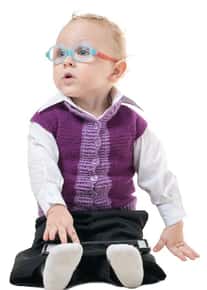
toddler wearing glasses

Corrective lenses are used to correct deviations, adjust focal points or neutralize other anomalies that impact the eyes’ ability to focus an image on the retina. To do this, the lenses must be the correct type and of the right power. Strength – which is expressed as diopeters – relies on the material of the lens, as well as the slope of the curve that is grounded into the lens. For instance, if the person is nearsighted and has trouble viewing objects far away, the lens will be concave, or thicker at the edges than in the middle, to allow for distant objects to come closer to the eyes. On the other hand, if the individual is farsighted and has a problem seeing objects up close, the lens will be convex, or thinner at the edges and thicker in the center. Convex lenses, unlike concave ones, bend toward the focal point, which makes the image appear larger than the object actually being seen.

  • Common Eye Conditions
    • Age-Related
    • Cognitive and Acquired
    • Vision Impairment
    • Injury & Irritation
    • Eye Lids
    • Changes in Appearance
  • Contact Lenses
  • Eye Diseases
  • Eyeglasses
    • Eyeglass Lenses
  • Eye Symptoms
  • How the Eyes Work
    • Basic Visual Skills
  • Pediatric Vision
  • Protecting Your Eyes
  • Visual Rehabilitation
  • Vision Problems
  • What is Vision Therapy
  • Vision Therapy Programs
  • We Can Help With
    • Cataracts
    • Corneal Disorders
      • Disorders
    • Glaucoma
    • Refractive Disorders
    • Adult Strabismus
    • Retinal Disorders
  • Newsletters
    • Glasses & Frames
    • Contacts
    • Tips for Healthy Eyes
    • Conditions That Affect Vision
    • Kid's Vision
    • Amazing, Interesting Eyes
    • Medical Perspectives

Newsletter Signup

Sign up for more articles

Error!

    Hours of Operation

    Our Regular Schedule

    Dr. Mark's Eyecare

    Monday:

    9:30

    5:30

    Tuesday:

    9:30

    5:30

    Wednesday:

    9:30

    5:30

    Thursday:

    9:30

    5:30

    Friday:

    9:30

    3:00

    Saturday:

    Closed.

    Closed

    Sunday:

    Closed

    Closed

    Location

    Find us on the map

    {CTA17txtbtn}
    • Copyright © 2026 MH Sub I, LLC dba iMatrix.
    • Admin Log In
    • Site Map